

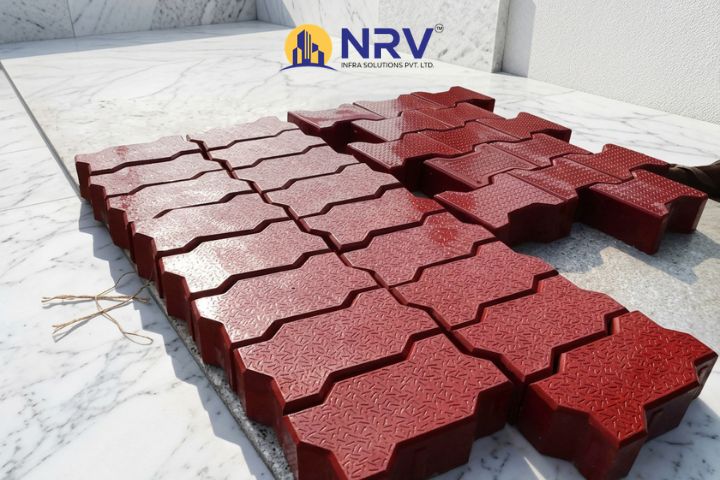
Cement paver blocks are now widely used across residential, commercial, and public projects in India. Whether it is a housing society driveway or a large industrial yard, these blocks offer a reliable surface that handles daily use with ease.
The shift towards cement paver blocks is driven by practical needs. Builders and property owners look for materials that last longer, require less repair, and perform well under Indian site conditions. These blocks meet those expectations while also offering flexibility in design and application.
What Are Cement Paver Blocks?
To understand what are paver blocks, it helps to look at how they are made and used. Cement paver blocks are pre-cast units manufactured using cement, sand, aggregates, and water. The mix is compacted using machines to achieve a dense structure and consistent strength.
Unlike traditional concrete surfaces that are poured on-site, these blocks are produced in controlled environments. This improves quality and reduces the chances of surface defects.
The installation process is also different. Instead of pouring a slab, blocks are placed over a prepared base and arranged in patterns. This method allows slight movement without causing visible cracks, which is one reason why concrete paver blocks India are widely used today.
Types of Cement Paver Blocks
Different projects require different shapes and strengths. The types of paver blocks used usually depend on load conditions and design preference.
Interlocking Paver Blocks
Interlocking paver blocks are designed to fit together in a way that distributes load across the surface. Once installed, the blocks hold each other in place, which improves stability.
They are commonly used in roads, parking areas, and industrial zones where vehicles move regularly. Their structure supports weight distribution, making them suitable for areas with repeated traffic.
Rubber Mould Paver Blocks
Rubber mould paver blocks are known for their smoother finish and design variety. They are produced using flexible moulds, which allows more shape and texture options.
These blocks are often used in residential areas, garden paths, and spaces where appearance matters along with function.
Zig-Zag Paver Blocks
Zig-zag paver blocks have a pattern that increases friction between units. This helps the surface stay intact under movement and load.
They are commonly used in driveways, fuel stations, and public walkways. Their design helps maintain alignment even with frequent use.
I-Shaped Paver Blocks
I-shaped blocks are one of the most commonly used forms in India. Their shape allows efficient load transfer across the surface.
They are suitable for footpaths, residential streets, and parking spaces. Due to their simple geometry and reliable performance, they are a standard choice for many projects.
Uses of Cement Paver Blocks
The uses of paver blocks cover a wide range of applications, from small residential spaces to large infrastructure projects.
Driveways are one of the most common applications. Many property owners prefer them due to the clear advantages of paver blocks for driveways, such as resistance to cracking and ease of repair.
Parking areas also benefit from these blocks. The surface remains stable even with continuous vehicle movement, which makes them suitable for commercial and residential parking zones.
Footpaths and walkways use paver blocks for safety and maintenance reasons. The surface provides slip resistance, and damaged sections can be replaced without disturbing the entire path.
Industrial flooring is another major application. Factories and warehouses need surfaces that can handle heavy loads. In such cases, interlocking paver blocks provide reliable performance.
Landscaping projects also make use of these blocks. They are used in parks, gardens, and outdoor spaces where both function and appearance are important.
Benefits of Cement Paver Blocks
The growing demand for cement paver blocks is linked to their practical advantages in real-world use.
Durability is one of the main reasons for their adoption. Since they are manufactured under controlled conditions, the final product offers consistent strength and long service life.
Load-bearing capacity is another important factor. These blocks distribute weight across multiple points, which helps prevent surface damage even under heavy loads.
Maintenance is straightforward. If a section gets damaged, only the affected blocks need to be replaced. This reduces repair time and avoids large-scale disruption.
Weather resistance also plays a role in their performance. Unlike poured concrete, paver blocks can handle temperature changes and minor ground movement without developing visible cracks.
Drainage is often overlooked, but it is a practical benefit. The joints between blocks allow water to pass through or move away, which helps prevent water accumulation on the surface.
Cement Paver Blocks vs Traditional Concrete
| Feature | Cement Paver Blocks | Traditional Concrete |
| Installation | Pre-cast and placed individually | Poured on-site |
| Maintenance | Easy to repair by replacing blocks | Requires breaking and reworking |
| Durability | Handles movement without major damage | Cracks over time |
| Drainage | Allows water movement through joints | Water tends to collect |
| Design Options | Multiple shapes and patterns | Limited finish options |
This comparison makes it easier to understand why many builders now choose cement paver blocks over traditional concrete methods.
How to Choose the Right Paver Blocks
Choosing the right blocks depends on the project requirements. Load is one of the first factors to consider. Areas with heavy vehicle movement require thicker and stronger blocks, while lighter applications can use standard options.
Location also matters. Outdoor areas exposed to rain need proper drainage, while industrial spaces need higher strength and durability.
Budget plays a role in decision-making. When reviewing the cost of paver blocks in India, it is useful to consider long-term maintenance rather than just initial cost.
Working with a reliable paver block manufacturer also affects the outcome. Proper manufacturing processes lead to better strength, uniformity, and long-term performance.
Why Choose NRV Infra
NRV Infra has built a strong presence as a paver block manufacturer in India by focusing on consistent production quality and dependable supply.
The manufacturing process uses controlled batching and high-pressure machines to produce uniform and durable blocks. This helps maintain quality across large orders.
The company supplies concrete paver blocks India for a range of applications, including roads, industrial flooring, and residential developments. Each project has different requirements, and the ability to deliver consistent materials makes a difference during execution.
Experience in handling varied project demands allows NRV Infra to support contractors and builders with the right solutions. From standard designs to application-specific needs, the focus remains on performance and reliability.
Build Stronger Surfaces with the Right Paving Choice
Choosing cement paver blocks is not just about surface finishing. It is about creating spaces that handle daily use without constant repair. From residential driveways to heavy-duty industrial areas, the right blocks make a clear difference in how a surface performs over time.
Each project has its own requirements. Load, location, and usage patterns all influence the final outcome. That is why selecting the right material and working with a dependable paver block manufacturer matters.
NRV Infra focuses on delivering concrete paver blocks India that meet practical construction needs. With consistent quality and experience across different applications, the aim is simple: provide paving solutions that last and perform as expected on site.
If you are planning a project and want materials that support long-term use, cement paver blocks are a reliable choice worth considering.
FAQs
What are cement paver blocks used for?
Cement paver blocks are used for driveways, parking areas, footpaths, industrial flooring, and landscaping. They provide a stable and durable surface.
Are paver blocks better than concrete?
In many cases, yes. They are easier to maintain and less prone to cracking compared to traditional concrete surfaces.
How long do paver blocks last?
With proper installation and base preparation, paver blocks can last for many years even under regular use.
What is the price of paver blocks in India?
The cost of paver blocks in India varies based on thickness, design, and manufacturing quality. Prices differ depending on project requirements.
Are paver blocks eco-friendly?
They support water drainage and allow easy replacement, which reduces material waste over time.