
POWER FLY ASH BRICKS
Fly Ash Bricks
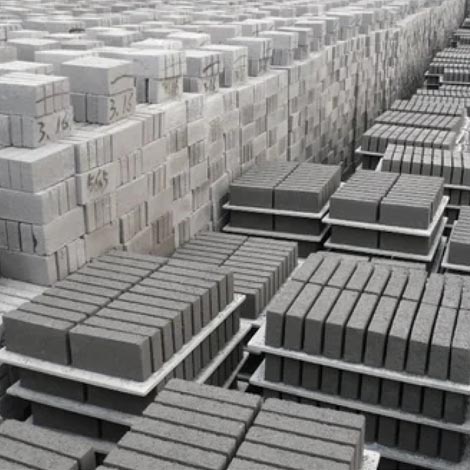
At NRV Infra, we manufacture high-quality power fly ash bricks designed for modern construction requirements. Our fly ash bricks are produced using a carefully engineered blend of fly ash, cement, stone dust, and aggregates to deliver consistent strength, durability, and dimensional accuracy.
As one of the trusted fly ash bricks manufacturers, we use advanced automated machinery with hydraulic pressure technology and controlled vibration systems to ensure every brick meets strict quality standards. The result is a reliable construction material that offers excellent compressive strength, lower water absorption, and superior finish compared to conventional clay bricks.
Our fly ash cement bricks are widely used in residential, commercial, industrial, and infrastructure projects due to their uniform shape, ease of installation, and long service life. They support sustainable construction practices by utilising industrial by-products and reducing dependence on traditional fired clay bricks.
Whether you are building homes, boundary walls, commercial complexes, warehouses, or partition walls, NRV Infra Power Fly Ash Bricks provide a dependable and economical solution for modern masonry work.
POWER FLY ASH BRICKS TECHNICAL DETAILS
| TECHNICAL DETAILS | Type I | Type II |
|---|---|---|
| Material | Fly Ash, Stone Dust & Chips, Cement. | Fly Ash, Stone Dust & Chips, Cement. |
| Size | 9" x 4" x 3" | 9" x 4" x 3" |
| Shape | Rectangular | Rectangular |
| Colour | Grey | Grey |
| Weight | 2.5 to 3 Kg | 3 to 3.5 Kg |
| Water Absorption | 10 to 12% weight of the brick. | 10 to 12% weight of the brick. |
| Compressive Strength | 7-10 Mpa | 7-10 Mpa |
| Dry Density | 1475-1800 Kg / m3 | 1475-1800 Kg / m3 |
| Vibration Frequency | 50-90 Hz | 50-90 Hz |
| Material Compaction System | Dual Vibration + Pressure Based. | Dual Vibration + Pressure Based. |
Advantages of NRV Infra Power Fly Ash Bricks

Light Weight

Eco Friendly

Cost Effective

Energy Saving

Easy Handling

Minimum Breakage

Durable
- Uniform shape and size reduce plaster thickness requirements.
- Lower water absorption minimizes dampness and seepage issues.
- Better bonding with mortar improves masonry strength.
- Reduced construction time due to dimensional consistency.
- Excellent workability for residential and commercial projects.
- Suitable for green building and sustainable construction initiatives.
- No soaking is generally required before use; light sprinkling of water is sufficient.
- Provides cleaner construction with less site wastage.
Steps for laying Fly Ash Bricks

Prepare the Foundation: Start by preparing a level and compact foundation for the brickwork. The foundation should be made of compacted soil or concrete and should be slightly wider and deeper than the bricks.
Mix the Mortar: Mix the mortar by combining Portland cement, sand, and water in the proper proportions. The mortar should be wet enough to be spread easily but not so wet that it drips.
Lay the Bricks: Start laying the bricks from one corner of the foundation/wall, using the mortar to adhere them to the foundation and to each other. Use a spirit level to ensure that each brick is level.
Cut Bricks if Needed: Cut bricks to size if necessary, using a masonary saw or chisel and hammer.
Fill the Joints: Fill the joints between the bricks with mortar, using a trowel. Ensure that the joints are uniform and smooth.
Clean the Bricks: Clean the surface of the bricks with a damp cloth to remove any excess mortar.
Allow the Mortar to Dry: Allow the mortar to dry completely before continuing the brickwork. This may take several hours or overnight.
Repeat Steps 3-7 until the desired height is reached.

Do's
- 1. Use a properly designed mortar mix suitable for the application.
- 2. Ensure bricks are laid on a clean and level surface.
- 3. Check alignment, plumb, and level regularly during construction.
- 4. Use quality materials for mortar preparation.
- 5. Store bricks on a dry and stable surface before use.
- 6. Follow recommended curing practices after brickwork completion.
- 7. Inspect bricks before use and remove damaged units.
- 8. Use trained masonry professionals for best construction results.

Don'ts
- 1. Do not use damaged or cracked bricks in structural applications.
- 2. Do not use poor-quality mortar that may affect bonding strength.
- 3. Avoid excessive mortar thickness between joints.
- 4. Do not overload freshly constructed walls before proper curing.
- 5. Avoid improper alignment during installation.
- 6. Do not expose stored bricks to unnecessary contamination.
- 7. Avoid shortcuts in curing and quality inspection procedures.
- 8. Do not compromise on workmanship during masonry construction.
Area of Applications
- Non-load bearing walls
- Internal partition walls
- Residential buildings
- Commercial complexes
- Industrial structures
- Educational institutions
- Hospitals and healthcare facilities
- Warehouses and storage buildings
- Boundary walls and compound walls
- Government and infrastructure projects
- Non-load bearing walls
- Internal partition walls
- Residential buildings
- Commercial complexes
- Industrial structures
- Hospitals and healthcare facilities
- Warehouses and storage buildings
- Boundary walls and compound walls
- Government and infrastructure projects
Safety Measures






Safety Precautions While Fixing Fly Ash Bricks
- 1. Wear Protective Gear: Always wear gloves, eye protection, safety shoes, and a dust mask when handling fly ash bricks and mortar, to protect against dust and other particles that can be harmful to your health.
- 2. Use Safe Lifting Techniques: When lifting bricks, use proper lifting techniques to avoid injury. Get help from a partner if necessary, and use a wheel barrow if available.
- 3. Be Careful with Tools: Be careful when using tools, such as hammers, chisels, and saws, to cut or shape the bricks. Use the proper technique, and ensure that the tools are in good condition before using them.
- 4. Use Scaffolding Safely: If using scaffolding, ensure that it is properly installed and secure before climbing it. Always use a safety harness, and follow all safety regulations.
- 5. Avoid Electrical Hazards: Avoid electrical hazards by keeping electrical cords and tools away from the wet mortar and water.
- 6. Follow Safe Laying Techniques: Follow safe laying techniques when laying the bricks, including using a level, ensuring uniform joints, and cleaning the bricks after laying.
- 7. Store Bricks Properly: Store bricks in a dry and well-ventilated area, away from moisture and extreme temperatures.
- By taking these safety precautions, you can reduce the risk of injury or harm while fixing fly ash bricks, and help to ensure that the job is completed safely and effectively.
FAQ's
Q1. What are power fly ash bricks?
Answer: Power fly ash bricks are engineered construction bricks manufactured using fly ash, cement, stone dust, and aggregates. They offer high strength, dimensional accuracy, and improved durability compared to traditional clay bricks.
Q2. Are fly ash bricks stronger than clay bricks?
Answer: Yes. Quality fly ash bricks generally provide better compressive strength, lower water absorption, and greater dimensional consistency than conventional clay bricks.
Q3. What are fly ash cement bricks used for?
Answer: Fly ash cement bricks are commonly used for partition walls, non-load bearing walls, residential buildings, commercial projects, industrial construction, and infrastructure developments.
Q4. Why choose NRV Infra fly ash bricks?
Answer: NRV Infra focuses on quality-controlled manufacturing, dimensional accuracy, consistent strength, and reliable supply for projects of all sizes.
Q5. Are fly ash bricks environmentally friendly?
Answer: Yes. Fly ash bricks utilise industrial by-products, reduce topsoil consumption, and support sustainable construction practices.