

Building a home or a commercial project involves hundreds of decisions. One of the first choices is selecting the right walling material. This decision affects construction cost, building strength, indoor comfort, and long term maintenance.
Autoclaved Aerated Concrete Blocks, commonly called AAC Blocks, have become one of the preferred walling materials in modern construction across India. Their lower weight, better insulation, and faster installation make them suitable for residential, commercial, and large housing projects.
At the same time, they may not be the right choice for every situation. Before selecting any building material, it is important to understand how it performs, where it works best, and what factors you should compare.
This guide explains everything that matters so you can make an informed decision. If you are looking for a trusted AAC block manufacturer in Mumbai, understanding these basics will help you compare products with confidence. At NRV Infra, we believe buyers should have clear and accurate information before making any construction decision.
What Are Autoclaved Aerated Concrete Blocks?
Autoclaved Aerated Concrete Blocks are factory made masonry units used for constructing walls in residential, commercial, industrial, and institutional buildings. They are manufactured using cement, fly ash or sand, lime, gypsum, water, and a small quantity of aluminium powder.
During manufacturing, aluminium powder reacts with the other ingredients and creates millions of tiny air pockets throughout the block. These air pockets make the material much lighter than traditional clay bricks while also improving thermal and sound insulation.
After the mixture expands, manufacturers cure the blocks inside high pressure steam chambers called ‘autoclaves’. This process gives AAC blocks their strength, dimensional accuracy, and consistent quality.
Today, AAC blocks are widely used across India because they support faster construction and reduce the overall dead load of a structure.
How Are AAC Blocks Made?
The manufacturing process follows a controlled sequence.
- Raw materials are mixed in fixed proportions.
- Aluminium powder creates millions of tiny air cells.
- The mixture expands and begins to harden.
- Large blocks are cut into standard sizes.
- They are cured under high pressure steam in an autoclave.
- Finished blocks undergo quality checks before dispatch.
This process helps produce blocks with consistent dimensions, making masonry work faster and reducing material waste.
Why Are AAC Blocks Becoming Popular in India?
The demand for AAC blocks has grown steadily because builders want materials that improve construction efficiency without compromising quality. As projects become larger and energy efficiency gains importance, lightweight walling materials have become a practical choice.
Compared with traditional clay bricks, AAC blocks can help reduce the overall dead load of a structure. Their larger size also means fewer joints, which can help speed up wall construction when installed correctly.
Government housing projects, private developers, architects, and civil contractors now use AAC blocks in many parts of India for apartments, villas, commercial complexes, hospitals, educational institutions, and industrial buildings.
AAC Block Sizes, Dimensions and Weight
AAC blocks are available in different sizes to suit various construction requirements. The length and height are generally standard, while the thickness changes depending on the wall application.
Common AAC Block Dimensions Used in India
The most commonly available dimensions are:
| Length | Height | Common Thickness |
| 600 mm | 200 mm | 75 mm |
| 600 mm | 200 mm | 100 mm |
| 600 mm | 200 mm | 150 mm |
| 600 mm | 200 mm | 200 mm |
| 600 mm | 200 mm | 230 mm |
| 600 mm | 200 mm | 250 mm |
| 600 mm | 200 mm | 300 mm |
Manufacturers may also produce custom sizes for specific project requirements.
The wall thickness should match the architectural drawings and structural requirements of the project. Many AAC blocks used in India fall within a dry density range of approximately 550 to 650 kg per cubic metre, although manufacturers may offer different grades for different applications.
Why Do Size and Density Matter?
Many buyers compare only the price of AAC blocks. A better approach is to compare the complete specification.
Before selecting AAC blocks, check:
- Dimensions are consistent.
- Corners and edges are not damaged.
- Density matches the manufacturer’s specification.
- Technical data sheet is available.
- Blocks have a uniform surface finish.
- The supplier has a reliable quality control process.
Looking at these factors together gives a better picture of product quality than price alone.
AAC Blocks Advantages and Disadvantages
Like every construction material, AAC blocks have strengths as well as limitations. Choosing the right material becomes easier when you understand both sides.
Advantages of AAC Blocks
AAC blocks offer several practical benefits.
- Lightweight and easy to handle
- Good thermal insulation
- Better sound insulation
- Fire resistant
- Accurate dimensions
- Faster wall construction
- Lower dead load on the structure
- Reduced material wastage
- Suitable for many residential and commercial projects
These advantages explain why AAC blocks have become a popular walling material across India.
Limitations of AAC Blocks
AAC blocks also have some limitations that buyers should understand before making a decision.
They Need Suitable Jointing Material
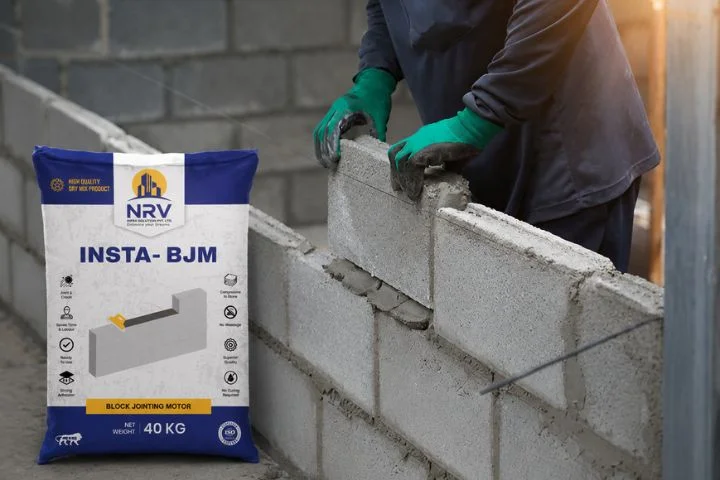
AAC blocks perform best when used with the recommended block jointing mortar or adhesive.
Using conventional thick cement mortar may affect dimensional accuracy and increase material consumption.
Careful Handling Is Important
Although AAC blocks are durable after installation, rough handling during transportation or unloading may damage corners and edges.
Proper storage and handling help maintain product quality.
Product Quality Varies Between Manufacturers
Not every AAC block available in the market offers the same quality.
Differences in raw materials, manufacturing process, density, and quality control can affect overall performance.
This is why choosing a reliable supplier is just as important as selecting the material itself.
Heavy Fixtures Need Suitable Fasteners
Standard wall plugs may not always be suitable for heavy fixtures.
Manufacturers often recommend appropriate anchors or fixing systems for mounting heavy cabinets, water heaters, or other equipment.
Following these recommendations helps achieve secure installations
Where Do AAC Blocks Work Best?
AAC blocks are a practical choice for many types of projects, including:
- Individual houses
- Apartment buildings
- Commercial complexes
- Schools
- Hospitals
- Hotels
- Office buildings
- Institutional buildings
The final material selection should always match the project’s structural design, local building requirements, and intended use.
Buying Tip
Before placing a large order, ask the manufacturer or supplier for:
- Technical data sheet
- Density specification
- Compressive strength values
- Product dimensions
- Quality certification, where applicable
- Sample blocks for inspection
If you are evaluating an AAC block manufacturer in Mumbai, compare technical specifications, manufacturing consistency, delivery capability, and after sales support instead of making your decision based only on the quoted price.
At NRV Infra, we encourage buyers to compare products on quality, consistency, and project suitability so they can make an informed decision.
AAC Block Price in India
The price of AAC blocks varies across different cities, manufacturers, and project sizes.
Instead of focusing only on the lowest quotation, compare the complete product specification before placing an order.
Several factors influence the final price.
Block Size
Larger blocks generally cost more than smaller ones because they contain more material.
Different wall thicknesses are selected based on the project drawings.
Density Grade
Density affects both weight and performance.
Different manufacturers may offer different density grades depending on the intended application.
Order Quantity
Bulk orders for residential projects, commercial buildings, or government housing projects often receive better pricing than small retail purchases.
Transportation
Freight charges depend on the delivery location, order quantity, and distance from the manufacturing plant.
Transportation can become a noticeable part of the overall project cost, especially for large orders.
Manufacturer
Manufacturing quality, production technology, and quality control standards may also influence pricing.
When comparing suppliers, always evaluate the complete specification instead of choosing only the lowest quotation.
What Should You Check Before Buying AAC Blocks?
Before finalising your order, verify the following points.
Product Dimensions
Measure a few sample blocks to check dimensional consistency.
Uniform block sizes help produce straight walls and reduce unnecessary adjustments during installation.
Density
Request the manufacturer’s technical data sheet and verify the specified density.
Density affects weight, handling, and insulation performance.
Surface Finish
The blocks should have smooth surfaces with minimal damage.
Avoid accepting blocks with excessive corner damage or visible cracks.
Manufacturer Details
Purchase from a manufacturer with consistent production standards and reliable supply capability.
If you are looking for an AAC block manufacturer in Mumbai, compare product quality, manufacturing capacity, technical support, delivery timelines, and customer service before making your decision.
Technical Documentation
Request:
- Product data sheet
- Density specification
- Compressive strength values
- Test reports, where available
- Installation recommendations
Reliable manufacturers are generally able to provide this information when requested.
At NRV Infra, we believe buyers should compare technical performance, product consistency, and service support before selecting AAC blocks for any construction project.
This approach helps reduce unexpected issues during construction and supports better long term performance.
Build Smarter With the Right AAC Blocks
Selecting the right walling material is an important step in any construction project. Autoclaved Aerated Concrete (AAC) Blocks offer a practical combination of lightweight construction, thermal insulation, fire resistance, and dimensional accuracy, making them a preferred choice for many residential and commercial buildings across India.
If you are looking for a trusted AAC block manufacturer in Mumbai, NRV Infra is committed to providing quality AAC blocks along with dependable support for your construction requirements. Before placing your order, discuss your project needs with our team so you can choose the right AAC block size, density, and specifications for your application.
Frequently Asked Questions
Q1. What is the full form of AAC blocks?
Answer: AAC stands for Autoclaved Aerated Concrete. These are lightweight precast building blocks made from cement, fly ash or silica sand, lime, gypsum, water, and aluminium powder. They are cured under high pressure steam to achieve strength and dimensional accuracy
Q2. What are AAC blocks used for?
Answer: AAC blocks are widely used for residential homes, apartments, commercial buildings, hospitals, schools, hotels, office spaces, and partition walls. They are suitable for projects that require lightweight walling material with good thermal and sound insulation.
Q3. Do AAC blocks help reduce construction time?
Answer: Yes. Since AAC blocks are larger than conventional clay bricks, fewer units are required to build the same wall area. This can help speed up masonry work when proper construction methods are followed.
Q4. Why choose NRV Infra for AAC blocks?
Answer: At NRV Infra, we focus on supplying quality AAC blocks that meet the needs of residential, commercial, and infrastructure projects. We aim to provide consistent products, dependable supply, and technical guidance so customers can make informed construction decisions.