

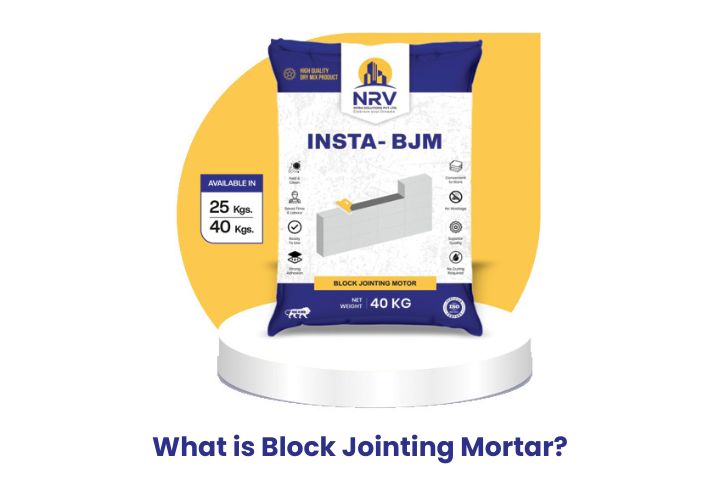
Block jointing mortar is a polymer-modified cementitious adhesive used for joining AAC, fly ash, and concrete blocks with thin joints, typically 3–5 mm thick. It offers higher bond strength, reduced cracking, faster application, and lower material consumption compared to traditional cement-sand mortar.
Modern masonry increasingly relies on Block Jointing Mortar because it solves many limitations associated with traditional site-mixed cement mortar. In simple terms, block jointing mortar is a ready mix, polymer modified thin bed mortar designed to join masonry blocks using a thin, high-strength adhesive layer. It improves bonding, reduces shrinkage cracks, speeds up construction, and supports cleaner, more accurate wall alignment.
Its growing use in AAC block construction, fly ash block masonry, and large-format lightweight blocks is tied to both engineering performance and practical site efficiency. Contractors value the faster workability. Engineers appreciate its controlled composition. Homeowners benefit from stronger, more durable walls with reduced maintenance risk.
As construction shifts toward precision materials and dry mix systems, block jointing mortar has moved from being an optional product to a preferred masonry solution.
What is Block Jointing Mortar?
Block jointing mortar is a factory-produced cementitious adhesive formulated for laying masonry blocks with thin joints. Unlike conventional mortar, which is usually mixed on site using cement and sand, this dry mix mortar is manufactured with controlled proportions of cement, graded fillers, polymers, and performance additives.
Its purpose is straightforward: create strong adhesion between blocks while maintaining uniform joints, usually around 3–5 mm, instead of the 10–12 mm joints common in traditional mortar beds.
That difference in joint thickness changes performance significantly.
With traditional mortar, thicker joints often introduce unevenness, higher material use, greater shrinkage, and more opportunities for cracking. Thin joint mortar minimizes those issues while improving wall integrity. This is why AAC block jointing mortar has become standard in many modern projects.
It is often described as masonry adhesive, thin bed mortar, or AAC block adhesive, though formulations may vary depending on manufacturer specifications and substrate compatibility.
Composition of Block Jointing Mortar
The performance of any block jointing mortar composition depends on how its ingredients are balanced. High-quality formulations are engineered, not improvised.
Ordinary Portland cement usually forms the primary binder. It contributes compressive strength and supports long-term durability. However, cement alone does not define performance.
Carefully graded mineral fillers are added to improve particle packing and create the smooth consistency needed for thin-bed application. This grading helps ensure uniform spread and proper contact between masonry units.
Polymers are where much of the advanced performance comes from. In polymer modified mortar, these additives increase flexibility, enhance adhesion, and improve resistance to shrinkage cracking. They also help the mortar accommodate minor movement without debonding.
Water retention agents play a critical role that is often underestimated on site. Lightweight blocks such as AAC can absorb water rapidly. Without retention additives, moisture can be drawn from mortar too quickly, weakening hydration and bond formation. Good formulations prevent that.
Additional bonding enhancers and workability modifiers may be incorporated to improve open time, spreadability, crack resistance, and shear strength.
A properly formulated high bond strength mortar is therefore more than cement with additives. It is an engineered construction bonding material designed for predictable performance.
How Block Jointing Mortar Works
The bonding mechanism is based on adhesion, mechanical interlocking, and proper cement hydration.
When mixed with water and applied using a notched trowel, the mortar forms a uniform adhesive bed. Blocks are placed while the mortar remains workable, allowing full surface contact.
Because the joints are thin, loads transfer more evenly through the wall system compared with irregular thick joints in traditional masonry.
This thin bed application also reduces dead load associated with excess mortar. In multi-story construction, even small material reductions can become meaningful.
Curing begins as cement hydrates and polymers contribute to cohesive bonding. Once cured, the mortar forms a dense bond line with strong adhesion between adjacent blocks.
The result is not simply a joint filler, but a structural connection.
That is why thin joint mortar is often preferred for precision masonry systems.
Uses of Block Jointing Mortar
The most common use of block jointing mortar is with AAC blocks, where dimensional accuracy allows the thin bed system to perform as intended. It is especially suited to lightweight autoclaved aerated concrete because conventional thick mortar often undermines the advantages of AAC construction.
Fly ash blocks are another major application. Their smoother surfaces and uniform geometry pair well with cementitious adhesive systems.
Concrete blocks, particularly machine-made precision blocks, also benefit from this method. In many commercial projects, contractors use ready mix block jointing mortar to maintain consistency across large wall areas.
Its use extends across residential housing, apartments, industrial buildings, schools, hospitals, and infrastructure projects.
Where speed, alignment, reduced wastage, and crack control matter, this material tends to outperform conventional methods.
Benefits of Block Jointing Mortar
The benefits of block jointing mortar are not limited to convenience. Much of its value comes from measurable construction and performance advantages.
Higher bond strength is one of the biggest reasons engineers specify it. The adhesive bond between blocks is often stronger and more consistent than manually mixed mortar joints.
Crack reduction is another major benefit. Traditional mortar can shrink significantly, especially with poor site mixing practices. Crack resistant mortar formulations help reduce this risk.
Faster application also changes project economics. Because mixing is simple and thin joints require less material, masons often achieve quicker progress rates.
Its practical advantages include:
- Reduced mortar consumption, cleaner work, lower wastage, and improved wall finish
- Better dimensional alignment, faster construction cycles, and lower labor dependency
There is also thermal relevance. Thin joints reduce thermal bridging compared with thick cement mortar joints, which matters in energy-conscious construction.
Cost efficiency often surprises first-time users. While bag cost may appear higher than conventional mortar ingredients, total installed cost can be lower when labor, speed, rework reduction, and wastage are considered.
That is why many builders now see ready mix block jointing mortar less as a specialty product and more as a productivity material.
Block Jointing Mortar vs Traditional Cement Mortar
The comparison often comes down to engineered consistency versus site variability.
| Parameter | Block Jointing Mortar | Traditional Cement Mortar |
| Joint Thickness | 3–5 mm | 10–12 mm |
| Material Type | Factory-made dry mix | Site mixed cement-sand |
| Bond Strength | High | Moderate, variable |
| Crack Resistance | Better | Lower |
| Application Speed | Faster | Slower |
| Material Consumption | Lower | Higher |
| Surface Finish | Cleaner and uniform | Less precise |
| Wastage | Minimal | Higher |
| Suitability for AAC Blocks | Excellent | Less ideal |
For precision masonry systems, block adhesive vs cement mortar is increasingly not a close contest.
Traditional mortar still has uses in conventional masonry, but for modern blockwork, thin bed systems generally offer stronger technical justification.
How to Apply Block Jointing Mortar Properly
Good application matters as much as product quality.
The substrate and blocks should be clean, dimensionally consistent, and free from loose dust. The dry mix should be blended with water according to manufacturer recommendations until a smooth lump-free consistency is achieved.
A notched trowel should be used to spread a uniform adhesive layer. This is not ordinary mortar laying where uneven beds can be compensated manually.
Blocks should be placed while the adhesive remains open and adjusted promptly for alignment.
Many failures blamed on product quality actually come from poor technique—overwatering, thick joints, or using ordinary masonry methods with thin bed systems.
Proper curing conditions should also be maintained according to project and weather conditions.
Experienced contractors know that performance comes from system discipline, not just material selection.
Common Mistakes to Avoid
Even good AAC block jointing mortar can underperform when basic mistakes occur.
Common site errors include:
- Adding excess water, using thick joints, or applying on dusty block surfaces
- Ignoring manufacturer curing guidance or using conventional troweling methods instead of thin-bed tools
Another frequent issue is poor block quality. Thin bed mortar works best with dimensionally accurate blocks. Irregular blocks often create uneven stress points and compromise joint performance.
Using a quality product but poor workmanship defeats the purpose.
How to Choose the Right Block Jointing Mortar Manufacturer
Not all products marketed as block mortar offer the same performance.
A reliable manufacturer should provide tested formulations, quality consistency, and documented technical properties such as bond strength, workability, and crack resistance.
Performance standards matter, but technical support matters too. Reputed block jointing mortar manufacturers often assist with application guidance, product suitability, and site troubleshooting.
This is particularly important on larger projects where material compatibility affects structural quality and finishing outcomes.
Look for manufacturers with proven expertise in dry mix systems rather than commodity-only supply.
For builders evaluating suppliers, factors such as packaging consistency, project references, laboratory support, and field performance should influence decisions.
Companies such as NRV Infra, focused on quality-driven construction materials, are increasingly positioned not merely as suppliers but as solution providers for modern masonry requirements. That distinction matters in practice.
Why Block Jointing Mortar is Shaping Modern Masonry
Modern construction increasingly depends on materials that improve both performance and efficiency, and block jointing mortar fits that shift perfectly. It is no longer seen simply as an alternative to traditional cement mortar, but as a smarter masonry solution for stronger bonds, cleaner finishes, and faster execution.
From AAC blockwork to large-scale commercial masonry, its value lies in combining engineering reliability with practical site advantages. Reduced cracking, lower wastage, better workability, and long-term durability make it a preferred choice for builders who prioritize quality construction.
As projects move toward precision-based methods, selecting the right block jointing mortar becomes part of building better walls, not just laying blocks. Choosing a trusted manufacturer also makes a measurable difference in performance on site.
At NRV Infra, the focus is on construction materials designed for real-world jobsite demands where consistency, bond strength, and efficiency matter. If you are planning masonry work that demands durability and modern performance, exploring the right block jointing solution is a practical place to start.
Frequently Asked Questions
1. What is block jointing mortar used for?
Block jointing mortar is used to join AAC blocks, fly ash blocks, and concrete blocks using thin adhesive joints in masonry construction.
2. What is the ideal thickness of block jointing mortar?
Most thin bed mortar applications use joints of about 3–5 mm, much thinner than conventional cement mortar joints.
3. Is block jointing mortar better than cement mortar?
For precision blockwork, it often offers better bond strength, lower cracking risk, faster application, and reduced material use.
4. What is block jointing mortar made of?
It typically contains cement, graded fillers, polymers, water retention agents, and bonding additives.
5. Can block jointing mortar be used for AAC blocks?
Yes. AAC block adhesive is one of the most common and effective applications for block jointing mortar.
6. How much area does one bag cover?
Coverage varies by brand, block size, and joint thickness, but many 40 kg bags can cover significantly more area than conventional mortar for equivalent masonry.
7. Is ready mix block jointing mortar cost effective?
Yes, when labor savings, reduced wastage, and faster construction are considered, total project costs may be lower.
8. How long does block jointing mortar take to cure?
Initial setting can occur within hours, while full curing develops over time based on product type and site conditions.