

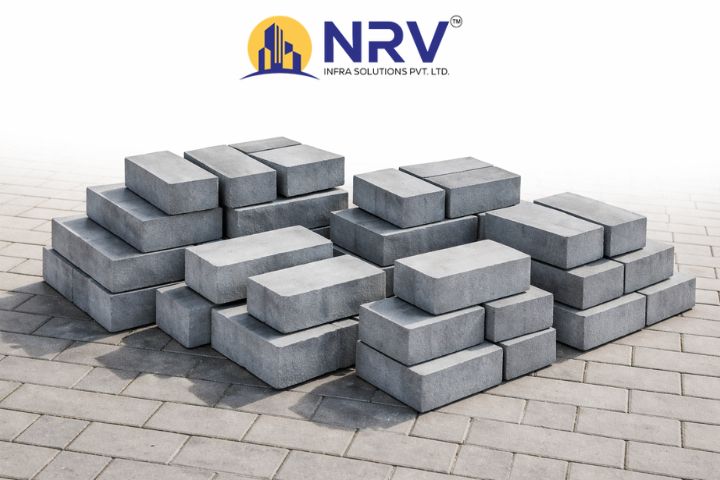
Fly Ash Bricks Benefits are driving a shift in how builders and developers approach construction in India. With rising material costs and stricter environmental norms, materials like fly ash cement bricks are gaining strong acceptance across residential and commercial projects.
Builders and contractors are actively comparing options, and the fly ash bricks advantages are becoming clear in terms of strength, uniformity, and cost control. Unlike traditional clay bricks, these bricks offer consistent quality and reduce dependency on natural resources, making them suitable for large-scale construction.
For developers aiming to control costs while maintaining quality, fly ash bricks provide a practical solution. As demand for eco-friendly building materials India grows, their usage is increasing across infrastructure, housing, and industrial construction.
What Are Fly Ash Bricks and How They Are Made
Raw Materials Used in Fly Ash Bricks
Fly ash bricks are produced using a mix of fly ash from thermal power plants, cement or lime, sand, and water. This composition gives them higher uniformity and structural strength.
Fly Ash Bricks Manufacturing Process
The fly ash bricks manufacturing process involves controlled mixing of raw materials, followed by moulding under pressure and curing. Unlike clay bricks, these are not kiln-fired, which reduces energy consumption. The curing process improves strength and ensures consistent quality across batches.
Fly Ash Bricks Benefits in Construction
Strength and Load Bearing Capacity
One of the major Advantages of fly ash bricks is their higher compressive strength. This makes them suitable for load-bearing walls and multi-storey structures.
Low Water Absorption
Fly ash bricks absorb less water compared to clay bricks. This reduces dampness, seepage, and long-term maintenance issues in buildings.
Cost Efficiency in Large Projects
Builders benefit from reduced mortar consumption due to uniform size. Plaster thickness is also lower, which cuts overall material cost. These savings become substantial in large-scale projects.
Uniform Shape and Better Finish
The smooth finish of fly ash bricks reduces the need for thick plastering. This helps achieve better wall alignment and faster construction progress.
Environmental Advantages
Fly ash bricks are part of sustainable construction materials as they utilize industrial waste. This reduces dependence on topsoil and supports environmentally responsible construction practices.
Fly Ash Bricks vs Clay Bricks
A direct comparison helps builders make informed decisions.
| Parameter | Fly Ash Bricks | Clay Bricks |
| Strength | Higher compressive strength | Moderate strength |
| Water Absorption | Low | High |
| Cost Impact | Lower overall project cost | Higher due to plaster and mortar |
| Finish | Smooth and uniform | Uneven surface |
| Environmental Impact | Uses industrial waste | Uses topsoil |
When evaluating fly ash bricks vs clay bricks, fly ash bricks offer better consistency and long-term cost savings. This is why many developers now prefer them over traditional red bricks.
Fly Ash Bricks Price in India and Cost Comparison
Average Price Range in India
The fly ash bricks price in India typically ranges between ₹4 to ₹8 per brick depending on location, quality, and volume. Bulk procurement further reduces cost per unit.
Cost Comparison Fly Ash Bricks vs Traditional Bricks
In a direct cost comparison fly ash bricks vs traditional bricks, fly ash bricks provide savings in multiple areas. Mortar usage is lower due to uniform size. Plaster thickness is reduced because of smooth surfaces. Labour cost also decreases due to faster construction.
For large projects, these combined savings can reduce total walling cost by a noticeable margin.
Why Use Fly Ash Bricks in Construction Projects
The question Why use fly ash bricks in construction is now common among developers shifting toward efficient materials.
Fly ash bricks are suitable for residential buildings, commercial complexes, and infrastructure works. Their consistent quality makes them reliable for large-scale projects where uniformity matters.
The Benefits of fly ash bricks in India construction industry include cost control, better performance, and reduced environmental impact. These factors make them a practical choice for modern construction needs.
Are Fly Ash Bricks Durable for Long-Term Construction
A common concern is Are fly ash bricks durable for long-term construction.
Fly ash bricks offer strong resistance to weathering and moisture. Their low water absorption reduces cracks and structural damage over time. When used with proper mortar and construction practices, they deliver long service life suitable for both residential and commercial structures.
Use Cases in Indian Construction Industry
Residential Projects
Used in independent houses and apartment construction for better finish and reduced plaster cost.
Commercial Buildings
Preferred in office buildings and retail spaces where uniform walls and durability are required.
Government and Infrastructure Projects
Widely used in public infrastructure due to compliance with standards and consistent quality.
How NRV Infra Supports Modern Construction
For builders looking to improve construction efficiency, material selection plays a major role. NRV Infra offers a complete range of solutions that complement fly ash bricks.
Their blocks help in faster structural work. Dry mix mortar improves bonding strength and reduces manual mixing errors. Construction chemicals support waterproofing and durability.
Using these materials together helps contractors achieve better quality, controlled cost, and faster project timelines.
Making the Right Choice with Fly Ash Bricks Benefits
Choosing the right walling material directly affects project cost, speed, and long-term performance. Fly Ash Bricks Benefits make them a practical option for modern construction in India, where efficiency and durability are both priorities.
For projects aiming at better finish, controlled cost, and reliable performance, combining fly ash bricks with quality materials like dry mix mortar and construction chemicals from NRV Infra can improve overall construction outcomes.
FAQs
Q1. What are the main fly ash brick benefits?
Answer: They offer higher strength, lower water absorption, better finish, and reduced construction cost.
Q2. Are fly ash bricks better than red bricks?
Answer: Yes, in most cases they provide better durability, uniformity, and cost efficiency.
Q3. What is the cost of fly ash bricks in India?
Answer: The price usually ranges between ₹4 to ₹8 per brick depending on region and quantity.
Q4. Are fly ash bricks safe for construction?
Answer: Yes, they are widely used in residential and commercial projects and meet construction standards.
Q5. Do fly ash bricks reduce construction cost?
Answer: Yes, savings come from reduced mortar, plaster, and labour requirements.
Q6. What is the lifespan of fly ash bricks?
Answer: They offer long service life when used with proper construction practices.
Q7. Can fly ash bricks be used for load-bearing walls?
Answer: Yes, due to their higher compressive strength they are suitable for load-bearing applications.